Meet the Five Personas
Each persona represents a different approach to using generative AI — giving students a memorable way to think critically about their AI use.

The Stranger
Understanding Source Reliability
"Nice chatting to you. Good luck with your work!"
You met someone at a pub who seems very knowledgeable about your field. They share impressive insights with complete confidence.
But, you don't know their credentials or even where the information comes from. Would you cite (Pub Stranger, 2025) in your academic work?

The Intern
Context & Oversight
"I'm happy to help – just don't expect perfection!"
AI is like an enthusiastic, always-available intern. They have many skills like summarising, transcription, scheduling, giving examples, creating visuals.
But they need clear, detailed, specific instructions to work effectively.
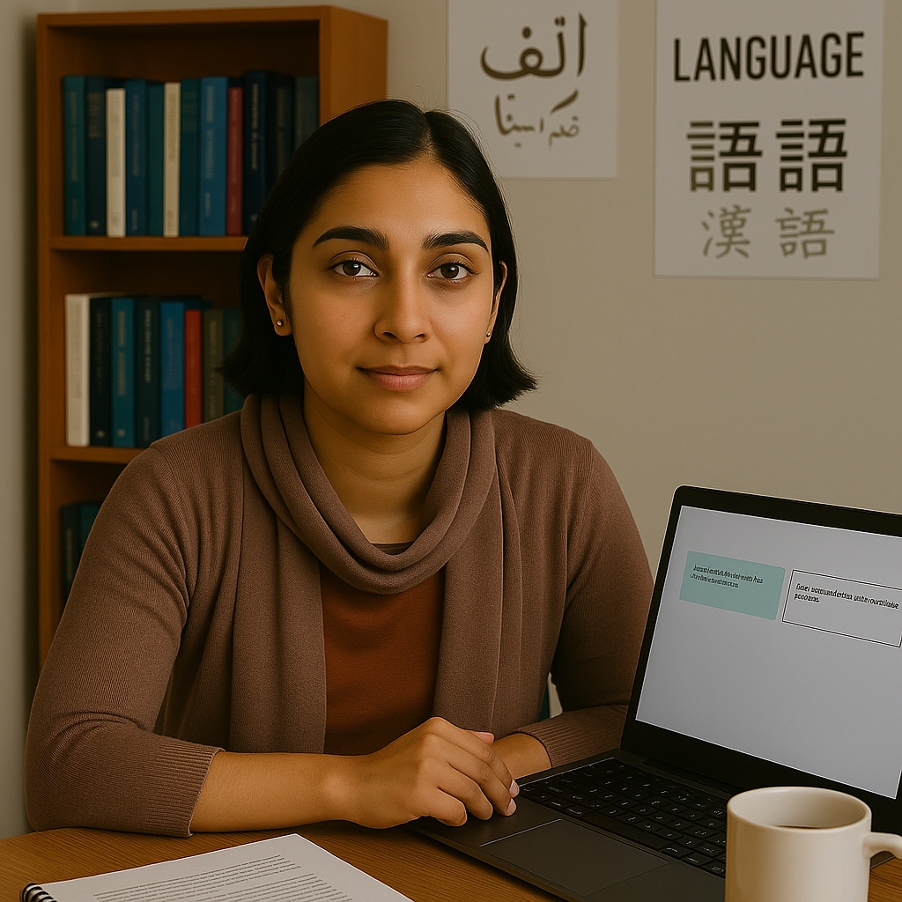
The Translator
Linguistic Accessibility
"I can help you understand and express ideas effectively!"
Generative AI acts like a "Semantic Translator" – changing form while preserving meaning. It can simplify complex academic texts, define specialised terms, and summarise dense information.
AI can help you to communicate academically, but the core ideas and arguments must be your own.

The Tutor
Enhancing Learning
"I won't do it for you – but I can help you learn to do it!"
AI can help you learn through interactive dialogue and personalised explanations. It can break down complex ideas, ask you questions, and engage you with discussions, working at your pace.
Ask questions like you would with a new human tutor – be specific about your subject, level, and learning goals.

The People Pleaser
Navigating Bias and Feedback
"I'll tell you what you want to hear :)"
AI models are usually trained to be helpful and agreeable, so they often tell you what you want to hear, not what you need to hear. They're encouraging and supportive, adapting to your tone and assumptions. But they can avoid critical feedback and may reinforce your biases.
Make sure you ask AI for critique, counterarguments, and challenges instead of just letting it validate you.